
Tinnitus: Christian Help for a Noisy and Anxious Mind
Tinnitus can be deeply distressing. The sound may be ringing, buzzing, hissing, humming, whooshing, throbbing, or another noise that seems to come from the ear or head. For some, it is a mild background sound. For others, it affects sleep, concentration, confidence and peace. This page brings together medical signposting, practical coping strategies, and biblical encouragement for those who are seeking help.
Please note: this page is for general information and pastoral support. It is not a substitute for medical advice, diagnosis or treatment. If your tinnitus is new, worsening, one-sided, pulsatile, linked with hearing loss, or causing serious distress, please speak to your GP, audiologist, ENT service, NHS 111, or emergency services as appropriate.
Important Medical Signposting
Tinnitus is often not a sign of a serious condition, but there are times when it should be assessed urgently. Please seek urgent medical help if tinnitus is associated with:
- sudden hearing loss, especially if it develops over 3 days or less
- facial weakness or other new neurological symptoms
- severe spinning dizziness or vertigo
- a head injury
- tinnitus that beats in time with your pulse
- severe distress, despair, or thoughts of self-harm
NICE recommends very urgent referral when tinnitus is associated with sudden hearing loss, and also gives specific guidance about pulsatile tinnitus and other symptoms requiring referral. Tinnitus UK also lists pulsatile tinnitus, unilateral or asymmetric tinnitus, tinnitus with vertigo, asymmetric hearing loss, psychological distress, or neurological signs as red flags for onward referral.
Useful links: NHS tinnitus guidance, NICE tinnitus recommendations, Tinnitus UK guidance for GPs.
What Is Tinnitus?
Tinnitus is the experience of hearing sound when there is no matching outside sound. The NHS describes it as hearing noises such as ringing, buzzing, whooshing, humming, hissing, throbbing, music or singing. It may affect one ear, both ears, or feel as though it is in the head.
Tinnitus is common. RNID states that around 1 in 7 adults have tinnitus all the time or regularly. It is often linked with hearing loss or other ear conditions, but it is rarely a sign of a serious condition.
Tinnitus is not a moral failure, a lack of faith, or something to be dismissed as “just anxiety.” It is a real experience, and it can place a heavy burden upon the mind, body and soul.
Why Tinnitus Can Feel So Frightening
Tinnitus often becomes more distressing when the brain treats the sound as a threat. The sound may trigger fear; fear increases bodily alertness; alertness makes the sound seem more prominent; then the louder-seeming sound increases the fear. This can become a painful loop.
A helpful way to understand it is this:
The sound is real, but the alarm around the sound can grow or shrink.
This is why good tinnitus support does not only ask, “How loud is the sound?” It also asks, “How is the sufferer coping? Are they sleeping? Are they frightened? Are they checking constantly? Are they withdrawing from ordinary life? Do they need medical help, audiology, counselling, practical support, or reassurance?”
Habituation and Hope
Many people do not find that tinnitus disappears immediately. Instead, they gradually habituate. Habituation means that the brain learns to treat the sound as unimportant and begins to place it in the background.
We experience this in ordinary life. We may stop noticing a ticking clock, a fridge hum, traffic in the distance, or the feel of clothing against the skin. The sound or sensation is still there, but the brain no longer gives it priority.
RNID explains that many people find that, with the right support, tinnitus becomes less noticeable over time, and that this process is called habituation.
- Habituation may mean noticing tinnitus less often.
- It may mean reacting with less fear when it is noticed.
- It may mean sleeping better, checking less, and returning to ordinary life.
- It may mean hearing the sound, but no longer treating it as master.
This is why repeated checking can be unhelpful. The more we listen for tinnitus to see whether it is still there, the more important the brain thinks it is.
What Can Help Practically?
There is no single approach that helps everyone, but current guidance and research point to several useful areas.
1. Medical and audiological assessment
NICE recommends offering audiological assessment to people with tinnitus. This can help identify hearing loss, wax, infection, middle-ear problems, or other issues that may need treatment.
2. Hearing aids where hearing loss is present
NICE recommends offering amplification devices, such as hearing aids, to people with tinnitus whose hearing loss affects communication, and considering them for people with tinnitus and hearing loss even where communication is not affected.
3. Gentle sound enrichment
The NHS advises not having total silence, because soft music or sounds may distract from tinnitus. This might include rain sounds, a fan, quiet music, nature sounds, or another gentle background sound.
4. CBT, ACT and counselling support
NICE recommends tinnitus-related CBT in a stepped approach for tinnitus-related distress. Cochrane found low-to-moderate certainty evidence that CBT may reduce the negative impact tinnitus has on quality of life at the end of treatment.
Helpful habits
- Use gentle background sound, especially in very quiet rooms or at night.
- Keep a steady sleep routine where possible.
- Relax the jaw, shoulders, neck and hands when you notice tension.
- Reduce repeated checking, testing, comparing and anxious searching.
- Speak to a GP, audiologist or ENT service if symptoms are new, one-sided, pulsatile, worsening, or linked with hearing changes.
- Seek support if tinnitus is affecting your mood, sleep, work, relationships, prayer life, or hope.
What Not to Do
When tinnitus frightens us, we may reach for reassurance in ways that help for a moment but make the fear stronger in the long term.
- Do not repeatedly test whether it is louder.
- Do not sit in silence to check whether it is still there.
- Do not measure the whole future by one difficult day.
- Do not assume every spike means permanent decline.
- Do not search online in panic late at night.
- Do not suffer alone if it is affecting your sleep, mood or hope.
A flare is not a prophecy. A louder day is not proof that we cannot cope. Awareness is not danger. Distress is not damage.
Biblical Help for Tinnitus
Tinnitus is not directly named in Scripture, but Scripture speaks tenderly and truthfully to bodily affliction, fear, weakness, sleeplessness, lament and hope.
The Bible does not ask us to pretend that suffering is small. The Psalms give language for distress. Paul speaks honestly of weakness. Creation groans under the effects of the fall. Yet the Lord is near to His people in their afflictions, and Christ is a compassionate Saviour.
“What time I am afraid, I will trust in thee.”
Psalm 56:3, KJVThis verse does not say, “I will never feel afraid.” It teaches us what to do when fear comes. When tinnitus pulls our attention inward, faith turns us again to the Lord.
“Thou wilt keep him in perfect peace, whose mind is stayed on thee: because he trusteth in thee.”
Isaiah 26:3, KJVThis peace is not shallow positivity. It is the settled rest of a mind stayed upon God: His character, His promises, His providence, His nearness, and His final redemption.
“My grace is sufficient for thee: for my strength is made perfect in weakness.”
2 Corinthians 12:9, KJVPaul’s thorn was not removed when he first pleaded, yet grace was given. For the believer, the deepest comfort is not that every affliction is immediately taken away, but that Christ is sufficient in the affliction.
Using lawful helps
It is right to seek medical assessment. It is right to use hearing aids if needed, sound enrichment if helpful, counselling if distressed, and practical routines for sleep and anxiety. These are lawful helps. We do not have to choose between trusting God and using means. God often cares for His people through means.
Yet lawful helps become burdensome when we demand that they give us total certainty or immediate control. The aim is not to chase perfect silence at any cost. The aim is to walk wisely, use appropriate help, and learn to live before God without being ruled by fear.
A Simple Tinnitus Flare Plan
When tinnitus feels loud or frightening, it can help to follow the same gentle sequence each time.
- Name it calmly.
“This is tinnitus. It is distressing, but I do not need to panic.” - Check once for medical warning signs.
Sudden hearing loss, facial weakness, severe vertigo, head injury, pulsatile tinnitus, new neurological symptoms, or severe distress need appropriate medical help. - Add gentle sound.
Use rain sounds, a fan, quiet music, nature sounds, or another soft background sound. - Relax the body.
Loosen the jaw, drop the shoulders, unclench the hands, and breathe slowly. - Turn from checking.
Do not test whether it is louder. Do not scan for it. Do not compare it with yesterday. - Return to one ordinary duty.
Make a drink, read a page, answer a message, pray, take a short walk, fold laundry, or speak to someone kind. - Answer fear with truth.
“What time I am afraid, I will trust in thee.” Psalm 56:3, KJV.
A Prayer for Tinnitus
Lord, thou knowest the sound I hear and the fear it can stir within me. Thou knowest my frame, my weariness, my longing for quiet, and my temptation to measure the future by this present distress.
Help me not to treat this sound as my master. Help me to use wise means without panic. Help me to rest my mind upon thy truth when my body feels unsettled.
Teach me to say: this is hard, but Christ is near; this is loud, but it is not sovereign; this is wearying, but it is not eternal.
Thou hast promised, “My grace is sufficient for thee.” Give me grace for this hour. Give me courage to do the next right thing. Give me patience while my body and brain learn not to fear. Give me hope in the day when every sorrow shall be gone.
Amen.
When Biblical Counselling May Help
Biblical counselling does not replace medical assessment, audiology, or ENT care. It may, however, be a very helpful support when tinnitus has become tangled with fear, intrusive thoughts, health anxiety, sleep distress, despair, spiritual discouragement, or compulsive checking.
In counselling, we may work gently on how to respond to the sound, how to reduce fear-driven habits, how to lament honestly before God, how to use practical routines, and how to bring anxious thoughts under the care and truth of Christ.
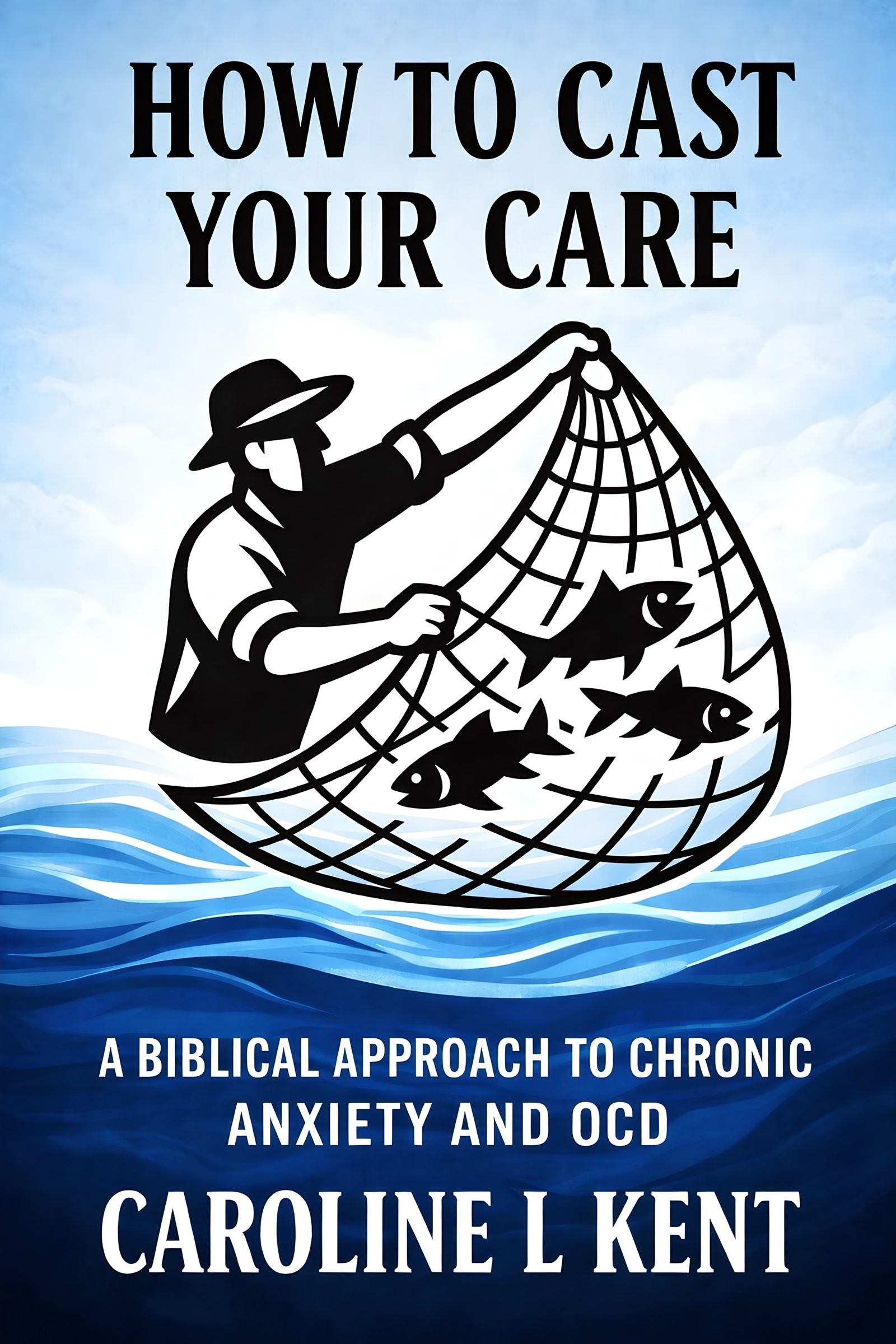
Recommended resource: How to Cast Your Care
My book, How to Cast Your Care , was written to help Christians who struggle with anxiety, intrusive thoughts, fear, false guilt, discouragement and distressing patterns of thought. Although it is not a medical book about tinnitus, many of its principles can be applied tenderly and practically to the experience of tinnitus-related anxiety.
Tinnitus often becomes harder to bear when the sound is joined by anxious thoughts such as, “What if this never improves?”, “What if I cannot cope?”, “What if I lose my hearing?”, or “What if I never have peace again?” The book helps us to recognise these fearful thoughts, bring them honestly before the Lord, and learn how to cast our care upon Him without becoming trapped in repeated checking, reassurance-seeking, panic, or despair.
Readers may find it especially useful to work through the book slowly, using it alongside sensible medical care and practical tinnitus management. The reflections, Scripture meditations and exercises can be used to:
- answer fearful “what if” thoughts with biblical truth
- reduce compulsive checking and repeated reassurance-seeking
- learn how to lament suffering without losing hope
- practise turning from panic to prayer
- build steadier habits of trust, patience and endurance
- remember that bodily affliction is real, but it is not sovereign
The aim is not to pretend that tinnitus is easy, nor to suggest that faith removes the need for medical help. Rather, it is to help the sufferer walk through tinnitus with Christ: using lawful means wisely, resisting fear-driven responses, and learning to say, with Scripture:
“Casting all your care upon him; for he careth for you.”
1 Peter 5:7, KJVFor those who feel overwhelmed by tinnitus, How to Cast Your Care may be used as a gentle companion: one small section at a time, with prayer, patience, and the reminder that Christ is nearer than the noise.
Sources, Credit and Further Research
The medical and practical information on this page has been gathered from current guidance and research sources, with links below so that visitors may read further for themselves.
- NHS: Tinnitus
General information, symptoms, when to seek help, and self-help advice including avoiding total silence and not focusing on tinnitus. - NICE Guideline NG155: Tinnitus, assessment and management
UK clinical guidance on assessment, referral, imaging, amplification devices, CBT and wider management. - Tinnitus UK
UK charity providing tinnitus information, support, helpline details and treatment information. - Tinnitus UK: Guidance for GPs
Useful red flag guidance, including pulsatile tinnitus, unilateral or asymmetric tinnitus, vertigo, neurological signs and psychological distress. - RNID: Tinnitus
Information on tinnitus, prevalence, hearing support and when to seek help. - RNID: Managing tinnitus
Practical information on tinnitus management, sound therapy, stress reduction, counselling and habituation. - Cochrane: Cognitive behavioural therapy for adults with tinnitus
Research review on CBT for tinnitus-related quality of life and distress. - NIDCD: What Is Tinnitus? Causes and Treatment
Information from the National Institute on Deafness and Other Communication Disorders on causes, mechanisms and treatment approaches. - ENT UK: Tinnitus, ringing in the ears
Patient information from ENT UK on tinnitus, common causes and treatment approaches.
Christian reading for affliction, fear and contentment
- Richard Baxter, A Christian Directory, Part I
Includes pastoral directions concerning troubled thoughts, fear, grief and bodily weakness. - John Flavel, The Mystery of Providence
A Puritan work on tracing and trusting the providence of God in the lives of His people. - Thomas Brooks, The Mute Christian Under the Smarting Rod
A pastoral work on quietness, submission and faith under affliction. - Jeremiah Burroughs, The Rare Jewel of Christian Contentment
A classic work on Christian contentment in changing and painful circumstances.