

Anxiety: A Biblical Perspective for Christians
Anxiety can feel less like a sudden storm and more like a long, grey pressure that follows us through the day. It can sit in the stomach like a stone, tighten the chest, disturb sleep, drain joy, and make ordinary responsibilities feel heavy and threatening.
For some, anxiety means constantly walking on eggshells, waiting for something to go wrong. For others, it means running catastrophic scenarios in the mind, rehearsing conversations, fearing bad news, or endlessly asking, “What if?”
For Christians this can be especially troubling. Many believers ask themselves:
- Why do I keep thinking like this?
- Why can I not simply switch it off?
- Am I failing to trust the Lord?
These questions can deepen the burden. Yet Scripture and the testimony of faithful believers through the ages remind us that fear, inward trouble, and mental distress are not strange to the Christian life.
King David wrote,
“What time I am afraid, I will trust in thee” (Psalm 56:3 KJV).
David did not pretend fear was absent. He acknowledged it honestly and turned toward God in the midst of it.
What Is Anxiety?
Anxiety is a troubled state of mind and body in which fear, tension, and apprehension become overactive and persistent. It often includes symptoms such as:
- tightness in the chest or stomach
- restlessness and inability to settle
- racing or repetitive thoughts
- difficulty concentrating
- poor sleep or waking early with dread
- irritability, tearfulness, or mental exhaustion
- constant “what if?” thinking
- catastrophising and expecting the worst
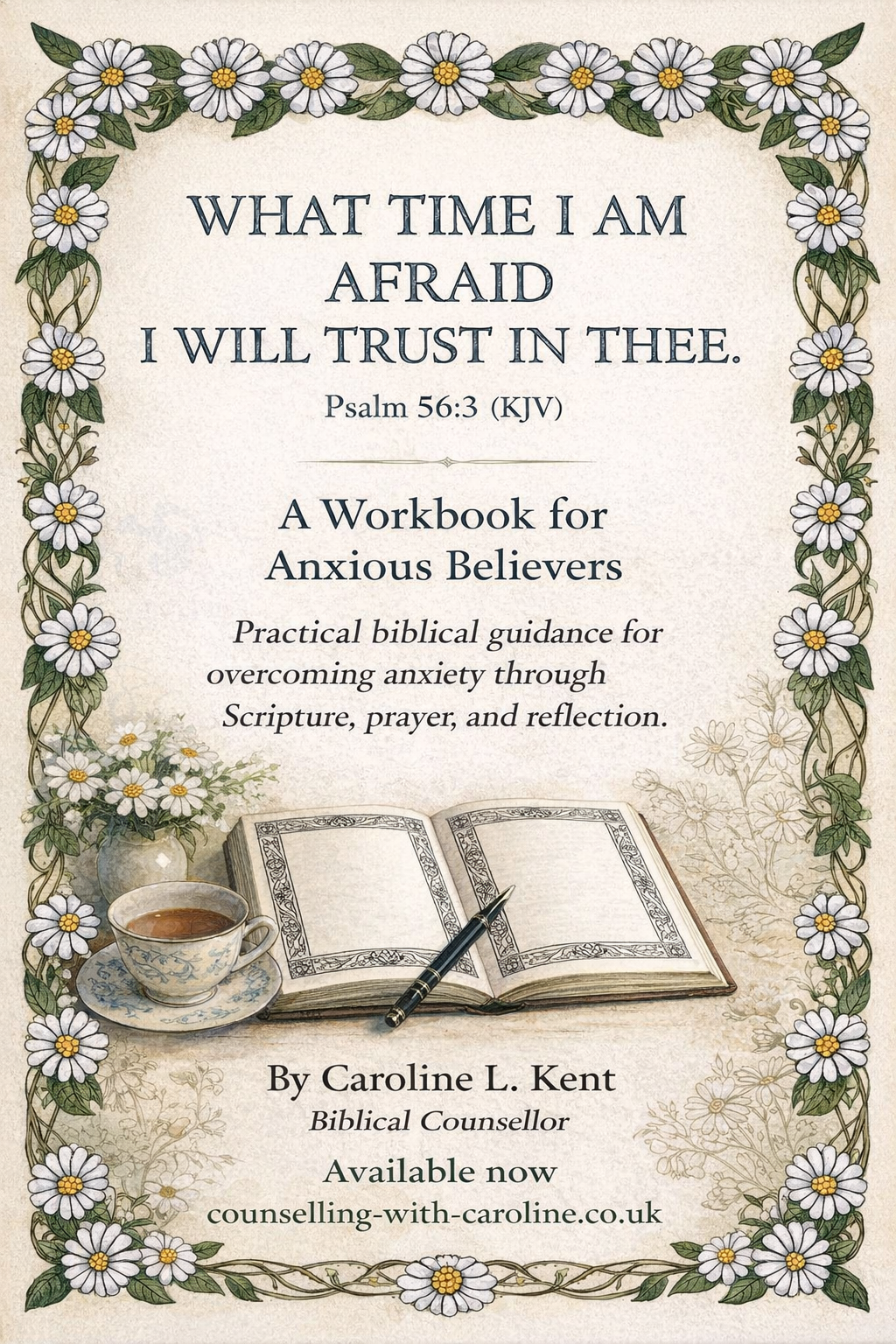
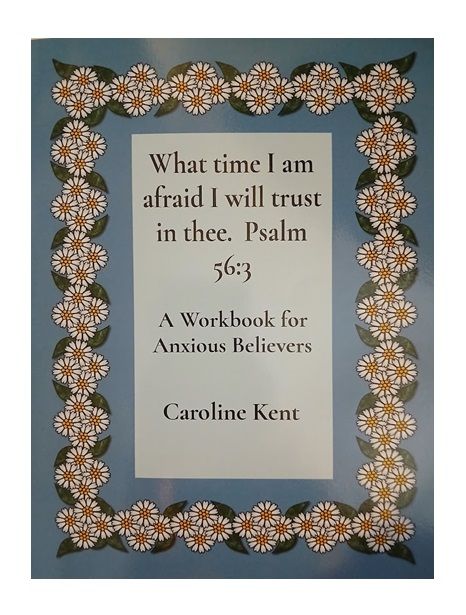
As I explain in What Time I Am Afraid :
“Anxiety is a normal reaction to stress… Without a fear response, we would not notice danger and might react too late, or not at all, to threats.” 1
Fear itself has a protective purpose. The problem is not that we ever feel fear, but that fear can become habitual, overgrown, and untethered from reality.
Fear and the Fallen World
Fear entered human experience through the Fall.
“I heard thy voice in the garden, and I was afraid” (Genesis 3:10 KJV).
Since then, we have lived in a world marked by sin, weakness, uncertainty, grief, illness, and death. Our minds and bodies do not operate as they were first created to operate.
Christians are not exempt from this frailty.
“Without were fightings, within were fears” (2 Corinthians 7:5 KJV).
This matters, because it helps us understand that anxious suffering is not always a simple matter of rebellion. Often it includes bodily weakness, temperamental frailty, sorrow, tiredness, and ingrained habits of fearful thought.
Anxiety Often Grows Through Thought Patterns
One of the exhausting features of anxiety is that it feeds on imagination. The mind begins to run ahead of providence. It tells stories about the future, predicts losses that have not happened, and treats possibility as certainty.
Common anxious patterns include:
- catastrophising
- assuming the worst outcome
- fortune telling
- rehearsing endless “what if?” scenarios
- mind reading and assuming others think badly of us
- repeated self-questioning and second-guessing
This is one reason anxiety can feel paralysing. The body may be safe in the present, but the mind is living in a dozen possible disasters at once.
Anxiety Is Not Helped by Harsh Self-Condemnation
Many anxious believers are not proud in the obvious sense. They are often painfully aware of weakness and failure. Yet anxiety can still be tied to subtle self-reliance, perfectionism, and an unwillingness to accept our creaturely limits.
We begin to think we should be able to foresee every danger, prevent every problem, manage every response, and hold everything together.
But that is not humility. That is trying to carry what belongs to God.
“Casting all your care upon him; for he careth for you” (1 Peter 5:7 KJV).
Notice that Scripture assumes believers have cares to cast. The problem is not that we have burdens. The problem is that we try to carry them without resting them on the Lord.
Richard Baxter urged troubled Christians not to let fears and melancholy thoughts govern the soul, but to bring them under the rule of truth and the fear of God, learning to live under providence rather than imagination (Baxter, 1673). 2
Christ Understands Our Weakness
The anxious Christian must remember that the Lord Jesus Christ is not distant from our frailty.
“For we have not an high priest which cannot be touched with the feeling of our infirmities” (Hebrews 4:15 KJV).
Christ knows human weakness. He knows sorrow, tears, anguish, opposition, and deep trouble of soul.
As I often remind those seeking biblical counselling:
“We need to go to the great Physician himself, Jesus Christ the LORD who, through His infallible Word, tells us how we can find peace and healing for our troubled souls.” 1
The anxious believer does not come to a severe master, but to a compassionate Saviour.
When Tiredness Makes Anxiety Worse
Anxiety often grows louder when the body is tired. Lack of sleep, low physical reserves, illness, overwork, and long-term stress can all make fearful thoughts seem more persuasive.
Elijah’s collapse after Carmel reminds us that spiritual struggle and physical depletion often overlap. The Lord first gave him sleep, food, rest, and renewed strength before addressing his fears (1 Kings 19).
This does not solve every anxious thought, but it does remind us that creaturely needs matter.
The Sovereignty of God in the Midst of Anxiety
One of the most stabilising truths for the anxious believer is the sovereignty of God.
Anxiety tells us everything depends on us foreseeing, fixing, or preventing what may come. Scripture tells us that the Lord is already where our thoughts are racing.
In What Time I Am Afraid I write:
“Submitting to God’s will and God’s way… remembering that our great God knows exactly what is going on… is the first step to relieving our anxiety.” 1
God is never surprised. He does not discover events when we do. Nothing enters our lives outside His wise providence.
Baxter likewise urged believers to live under the government of divine providence, remembering that our lives are ordered not by chance, but by the wise hand of God (Baxter, 1673). 2
Practical Steps When Anxiety Tightens
When anxiety is rising, the following steps may help.
1. Slow the spiral
Anxiety loves speed. Slow your breathing, your speech, and your reactions. Refuse to let your mind gallop unchecked into every possible future.
2. Name the fearful story
Ask yourself: “What story am I telling myself right now? What disaster am I assuming?” Often anxiety feels powerful because it remains vague. Naming it helps expose it.
3. Speak biblical truth
Replace imagined futures with revealed truth.
“What time I am afraid, I will trust in thee” (Psalm 56:3 KJV).
“Be careful for nothing; but in every thing by prayer and supplication with thanksgiving let your requests be made known unto God” (Philippians 4:6 KJV).
4. Pray plainly
You do not need elegant words. Say, “Lord, my mind is running ahead of me. Help me trust you with what I cannot control.”
Renewing the Mind
Long-term relief from anxiety involves retraining the mind.
“Be ye transformed by the renewing of your mind” (Romans 12:2 KJV).
Anxiety often becomes a habit of interpretation. We interpret delays as danger, silence as rejection, uncertainty as catastrophe, and weakness as failure.
In my counselling work I encourage believers to identify, capture, and challenge these thought patterns.
“Our unruly minds tend to frame things creatively… in the light of human wisdom rather than the wisdom of God.” 1
Replacing fearful imagination with scriptural truth is slow work, but it is fruitful work.
Small Steps Toward Healing
Recovery from anxiety is rarely instant. More often, it is learned in quiet, repeated acts of faithfulness:
- daily prayer
- reading and meditating on Scripture
- challenging catastrophic thoughts
- healthy sleep and nourishment
- remaining in Christian fellowship
- seeking wise pastoral and medical support where needed
Sometimes medical support is part of wise care. Receiving help for the body is not opposed to trusting God. It may be one of the ordinary means through which He steadies us.
You Are Not Alone
Many faithful believers know what it is to live with inward trouble.
“Why art thou cast down, O my soul?” (Psalm 42:5 KJV).
Yet the psalmist does not stop with self-observation. He preaches to his own soul:
“Hope thou in God.”
This is part of the Christian fight against anxiety: not pretending fear is absent, but answering it with truth.
A Final Word of Hope
If you are living with constant tension, exhausting “what if?” thoughts, and weary dread, remember this:
Your anxiety does not place you outside the care of God.
Your weakness does not cancel His compassion.
Your future is not safer in your imagination than in His hands.
The Lord who keeps your soul is not careless with your days. He invites you to bring your fears to Him again and again.
“Casting all your care upon him; for he careth for you” (1 Peter 5:7 KJV).
References
1 Kent, C., 2024. What Time I Am Afraid: A Workbook for Anxious Believers. Counselling with Caroline Kent.
2 Baxter, R., 1673. A Christian Directory. London.
Pink, A.W., 1928. The Sovereignty of God. London.
Watson, T., 1663. A Divine Cordial. London.